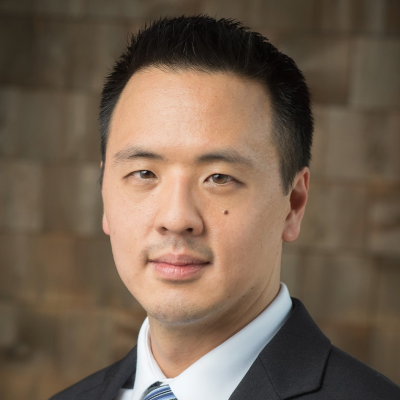
Jack Lu is Director of Implementation at the Child Health and Development Institute (CHDI) in Farmington, Connecticut. Jack leads the dissemination and implementation of multiple evidence-based treatment initiatives for youth with behavioral health concerns. His particular focus is expanding a continuum of substance use and co-occurring disorder care that spans prevention, early intervention, treatment, and recovery.
At CHDI, Jack also worked as a senior project coordinator for the Modular Approach to Therapy for Children with Anxiety, Depression, Trauma, or Conduct Problems (MATCH-ADTC) imitative; the Cognitive Behavioral Intervention for Trauma in Schools (CBITS) program; the Trauma-focused Cognitive Behavioral Therapy (TF-CBT) program; and the Mobile Crisis Performance Improvement Center.
Jack’s also the Principal Investigator for three federal grants that expand integrated, co-occurring services for youth, adults, and families. He’s the author of several peer-reviewed journal articles appearing in the Journal of Consulting and Clinical Psychology, Journal of Community Health, Journal of Social Work Education, among others.
Throughout his professional career, Jack has focused his work on communities that experience marginalization through direct practice, research, and scholarly activities. His primary interests include community-based participatory initiatives, health equity, refugee and immigrant communities, and models of integrated care.
After earning both an MSW and Ph.D. in social work from the UConn School of Social Work, Jack has found appreciation in the never-ending pursuit to learn and work alongside those with lived experiences to fight injustice.
“For more than 20 years, UConn has provided me with spaces to grow and evolve—to be a better, more inspired person for myself and others,” he said. “My gratitude in these opportunities afforded to me is only paid forward through the skills I am able to leverage in my career and personal life. My life is in service, and I aspire to do what many others have done before and will continue to do after me.”
Jack is often inspired by the legacies of other social justice giants and their impact, particularly the following self-reflective quote from Justice Ruth Bader Ginsburg, “Someone who used whatever talent she had to do her work to the very best of her ability. And to help repair tears in her society, to make things a little better through the use of whatever ability she has.”
Jack advises prospective and current students to find pride in how they share themselves, their culture, and find their unique skills to confront challenges faced in society.
“Show up in as many ways that you can when the work calls you to serve others,” he said. “On behalf of community health work and the many communities who I have learned from along my career path, particularly Cambodian Americans, keep in mind that to heal you is to heal me. Once a husky, always a part of the pack.”